Understanding Waqf: The Rules of Stopping in Quran Recitation
If you have ever heard a reciter pause mid-verse and then resume so smoothly the meaning never broke, you have heard Waqf done well. Waqf (الوقف) is the Tajweed science of where to stop when reciting the Quran, and its partner Ibtida (الابتداء) is where to start again. Stopping in the wrong place can change or reverse the meaning of a verse, so scholars treat Waqf as essential knowledge, not decoration. This guide explains the main rules, the symbols printed in your mushaf, and a practical way to learn to stop cleanly.
QuranCast by NEARFOLD (Dubai) is an AI Quran teacher that listens to your recitation and corrects your Tajweed in real time, including where you stop and start.
What does Waqf mean in Tajweed?
Waqf means stopping the sound at the end of a word, usually to take a breath, with the intention of resuming. In practice it has two parts: stopping on a word in a correct state, and choosing a stopping point that does not corrupt the meaning. The related rule of Ibtida governs where you may begin reciting after that stop.
When you stop on a word, several things happen automatically: a final short vowel (harakah) or tanween is dropped and the letter is read with sukoon, a final tanween fath (ـً) becomes an alif sound of two counts, and a final taa marbuta (ة) is pronounced as a soft 'h'. Knowing these lets you stop anywhere without guessing.
Why does stopping correctly matter?
Stopping at the wrong point can change the meaning of the words of Allah. The Quran is precise; a pause in the middle of a phrase can join words that should be separate or cut a statement before its qualifier. That is why the mushaf is printed with stop symbols and why students are taught Waqf alongside the letter rules like Ghunnah and Qalqalah.
What are the main types of stop?
Scholars of Waqf classify stops by how acceptable the stopping place is. The four you will meet most often are:
- Waqf Tamm (the complete stop) — stopping at the end of a verse or sentence where the meaning is fully complete and not tied to what follows. This is the best stop.
- Waqf Kafi (the sufficient stop) — stopping where the meaning is complete in itself but still connected to the next part. Acceptable.
- Waqf Hasan (the good stop) — stopping where the words are grammatically sound but the meaning leans on what comes after. Permissible, though you should resume from a sound point.
- Waqf Qabih (the disliked stop) — stopping where the meaning is broken or distorted. Avoid it.
What do the stop symbols in the mushaf mean?
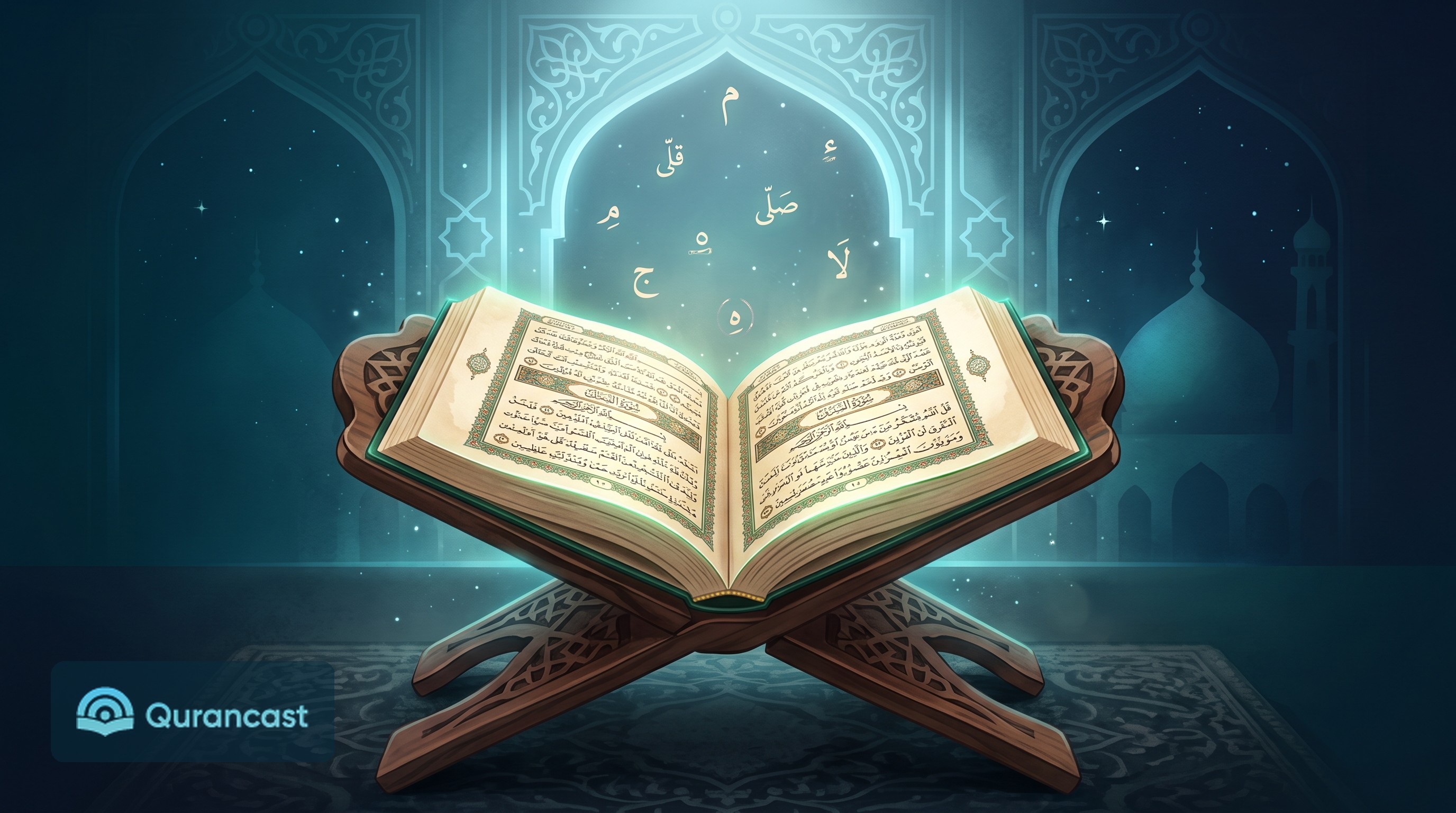
The small marks printed above the text in a standard mushaf are a built-in Waqf guide. The most common ones are:
- مـ (meem) — Waqf Lazim: you must stop here; continuing would change the meaning.
- ط — Waqf Mutlaq: a natural, preferred stop.
- ج — Waqf Ja'iz: stopping is permissible.
- صلى / قلى — better to continue (صلى) or better to stop (قلى), though both are allowed.
- لا — do not stop here; stopping distorts the meaning.
- ∴ (three dots) — the 'embracing' stop: stop at one of the two marked points, not both.
How do I stop on a word correctly?
Follow this short process whenever you need to pause:
- Finish the word you are on; do not cut it in half.
- Make the last letter saakin (drop the final vowel or tanween).
- If the word ends in tanween fath (ـً), read it as an alif of two counts (for example, قرءانًا).
- If the word ends in taa marbuta (ة), pronounce it as a soft 'h'.
- Breathe, then resume from a sound starting point (Ibtida) that keeps the meaning intact.
What is Ibtida, and where should I start again?
Ibtida is where you begin reciting after a stop. The rule of thumb is to resume from a word that makes the sentence complete and clear, even if that means going back a few words. If you stopped at a Waqf Tamm (a complete stop), you can simply start the next verse. If you stopped earlier out of necessity, step back to where the meaning is whole.
Common Waqf mistakes to avoid
- Stopping mid-word. Always complete the word before you pause.
- Reading the final vowel aloud. On a stop, the last letter goes saakin; do not sing the final harakah.
- Ignoring a 'مـ' or 'لا'. One forces a stop, the other forbids it. Trust the symbols until your own knowledge grows.
- Resuming from the wrong word. Restarting mid-phrase can reverse the meaning, so step back to a sound point.
How can I practice Waqf?
Learn the symbols, listen to a precise reciter, and get corrected in real time. Read a short surah while following the stop marks, then listen to how a reciter such as Sheikh Al-Husary handles each pause. Then recite aloud and have your stops checked. An AI Quran teacher like QuranCast listens as you recite and flags weak stops and restarts on the spot, which is far faster than discovering them weeks later.
Frequently asked questions
What is the difference between Waqf and Ibtida?
Waqf is the stop; Ibtida is the start. Good recitation needs both — a clean stop on a correctly-read word, and a restart from a point that keeps the meaning whole.
Do I have to stop exactly where the mushaf marks say?
The marks are a reliable scholarly guide, not an absolute chain. You may stop elsewhere if the meaning stays sound, but you must respect a mandatory stop (مـ) and never stop where a 'لا' forbids it.
Is Waqf only for advanced students?
No. Beginners benefit from learning the basic symbols early, because stopping correctly protects the meaning from the very first surah you memorize. It grows naturally alongside your other Tajweed rules.