Arabic Letters and Harakat: A Beginner's Guide
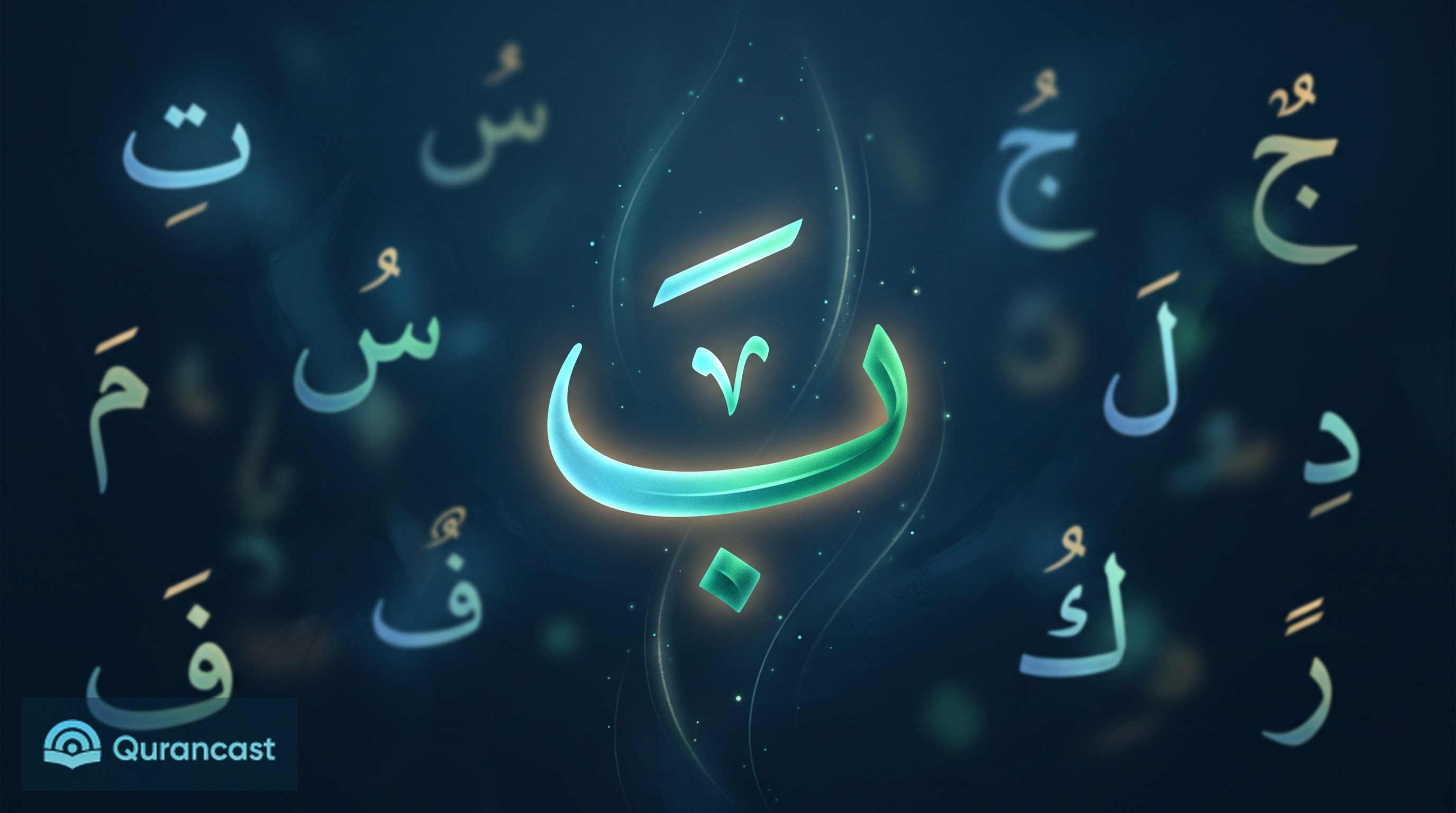
Arabic reading starts with two building blocks: 28 letters and a small set of vowel marks called harakat (حَرَكَات). Learn the letters' sounds, then learn the marks that sit above and below them, and you can sound out any word in the Mushaf. This guide maps both — with real Quran examples and the mistakes beginners most often make.
What are the Arabic letters?
The Arabic alphabet has 28 letters, written right to left. Every letter is a consonant; vowels are shown by separate marks (the harakat) rather than by letters of their own — with three exceptions (ا و ي) that can also act as long vowels. That is why a letter like ب is only a shape until a harakah tells you to say ba, bi, or bu.
For an English speaker, some letters are instantly familiar — ب (b), ت (t), س (s), م (m). Others have no English equivalent and need ear training before tongue training:
- ع (ʿayn) — a voiced sound produced in the middle of the throat; nothing like the English “a”.
- ح (ḥāʾ) — a breathy, whispered “h” from the mid-throat, unlike the soft English “h”.
- ق (qāf) — a deep “k” from the back of the tongue against the soft palate.
- ص، ض، ط، ظ — the “heavy” (emphatic) letters, pronounced with the tongue raised toward the palate.
Knowing where each letter is produced is the science of Makharij (articulation points) — the first Tajweed skill worth learning after the alphabet itself.
What are the harakat?
Harakat are the vowel marks that tell you how to voice each letter. There are three short vowels, plus two marks that do the opposite jobs of doubling a letter and silencing it:
- Fatha (فَتْحَة) — a small stroke above: بَ = ba
- Kasra (كَسْرَة) — a small stroke below: بِ = bi
- Damma (ضَمَّة) — a tiny و above: بُ = bu
- Sukoon (سُكُون) — a small circle above: بْ = the letter with no vowel
- Shaddah (شَدَّة) — a small “w” shape: بّ = the letter doubled (held twice as long)
Every word in the Mushaf carries its full set of marks, so the written text tells you the complete pronunciation — nothing is left to guesswork. That is one of the great gifts of reading the Quran in Arabic.
What is tanween?
Tanween (تَنْوِين) is a doubled vowel mark that adds an “n” sound to the end of a word: بً = ban, بٍ = bin, بٌ = bun. You will see it constantly — for example in عَلِيمٌ حَكِيمٌ (ʿalīmun ḥakīm), and in the very first surah, ٱلْحَمْدُ لِلَّهِ رَبِّ ٱلْعَٰلَمِينَ ends on tanween kasr: ʿālamīn. Tanween matters beyond pronunciation because it triggers some of the most common Tajweed rules (Izhar, Idgham, Iqlab and Ikhfa), which you will meet as you progress.
Which Quran words show the harakat in action?
You already know more of them than you think. The opening of the Quran uses every basic mark:
- بِسْمِ (bismi) — kasra under ب, sukoon on س, kasra under م.
- ٱلْحَمْدُ (al-ḥamdu) — fatha on ح, sukoon on م, damma on د.
- ٱلرَّحْمَٰنِ (ar-raḥmāni) — shaddah on ر (doubled), fatha on ح, sukoon on م.
- إِيَّاكَ (iyyāka) — shaddah on ي with its own fatha: iy-yā-ka.
Read these slowly, mark by mark, and you are already doing exactly what a structured reading curriculum — from the classic Noorani Qaida onward — is designed to teach.
How do you actually learn them?
Twenty to thirty focused minutes a day beats an occasional long session. A proven sequence:
- Letter shapes and names first. Recognise each letter in its isolated form, then in its connected forms.
- Sounds second. Pair every letter with its sound by listening and repeating, not just reading.
- Harakat third. Practise each letter with all three short vowels: بَ بِ بُ, تَ تِ تُ — until the mark, not the letter, drives your voice.
- Then sukoon, shaddah and tanween, and finally real words and short surahs.
Two mistakes slow most beginners: learning letters from charts alone (without hearing them), and rushing to words before the harakat are automatic. Both are fixed the same way — by reciting out loud and getting corrected. That is precisely what QuranCast's AI Quran teacher is built for: you read, it listens, and it corrects the exact letter or mark that slipped, at any hour, for as many repetitions as you need. The Nazira mode walks you through this exact progression — letters, then harakat, then words — with pass criteria at each step.